Category: Power Wheelchair
Posted by 2025-12-11 11:12
hoyer lift and sit to stand
Hoyer Turning Lift vs. Standing Aid: Choosing the Right Patient Transfer Equipment
When caring for patients with limited mobility, safe transfer is one of the core challenges, directly impacting the safety of both patients and caregivers. The Hoyer Turning Lift and Standing Aid are two of the most commonly used professional transfer devices, yet their original design purposes, working principles, and target user groups are distinctly different. Understanding their differences is key to making the right choice and achieving safe, efficient care.
I. Hoyer Turning Lift: Full-Support Transfer
1. Core Functions and Design
Working Principle: A Hoyer Turning Lift is a ceiling-mounted or mobile-framed device. It uses a mechanical arm and a fully enclosed sling to completely lift the patient off the bed or chair, then smoothly move and place them in another location (e.g., from bed to wheelchair, or wheelchair to toilet).
Alternative Names: Patient turning lift, hoist transfer machine.
2. Target User Groups
Patients who are completely unable to stand or bear weight (e.g., those with lower limb paralysis, quadriplegia, or advanced multiple sclerosis).
Postoperative patients: For example, patients who have undergone hip or knee replacement surgery and are strictly prohibited from bearing weight on the affected limb.
Patients with heavier body weight, for whom manual lifting poses extremely high risks.
Patients who are unconscious or unable to follow instructions.
3. Advantages
Zero weight-bearing: Patients do not need to use leg strength at all during the entire process, achieving truly weight-free transfer.
Extremely high safety: It completely eliminates the risk of falls and injuries to patients during lifting.
Excellent protection for caregivers: The mechanical device bears the entire weight, completely avoiding low back strain for caregivers.
4. Limitations
Operation is relatively complex and requires practice.
A certain amount of space is needed to operate mobile turning lifts.
The process of using a sling may make some patients feel a loss of dignity.
II. Standing Aid: Assisted Lifting Transfer
1. Core Functions and Design
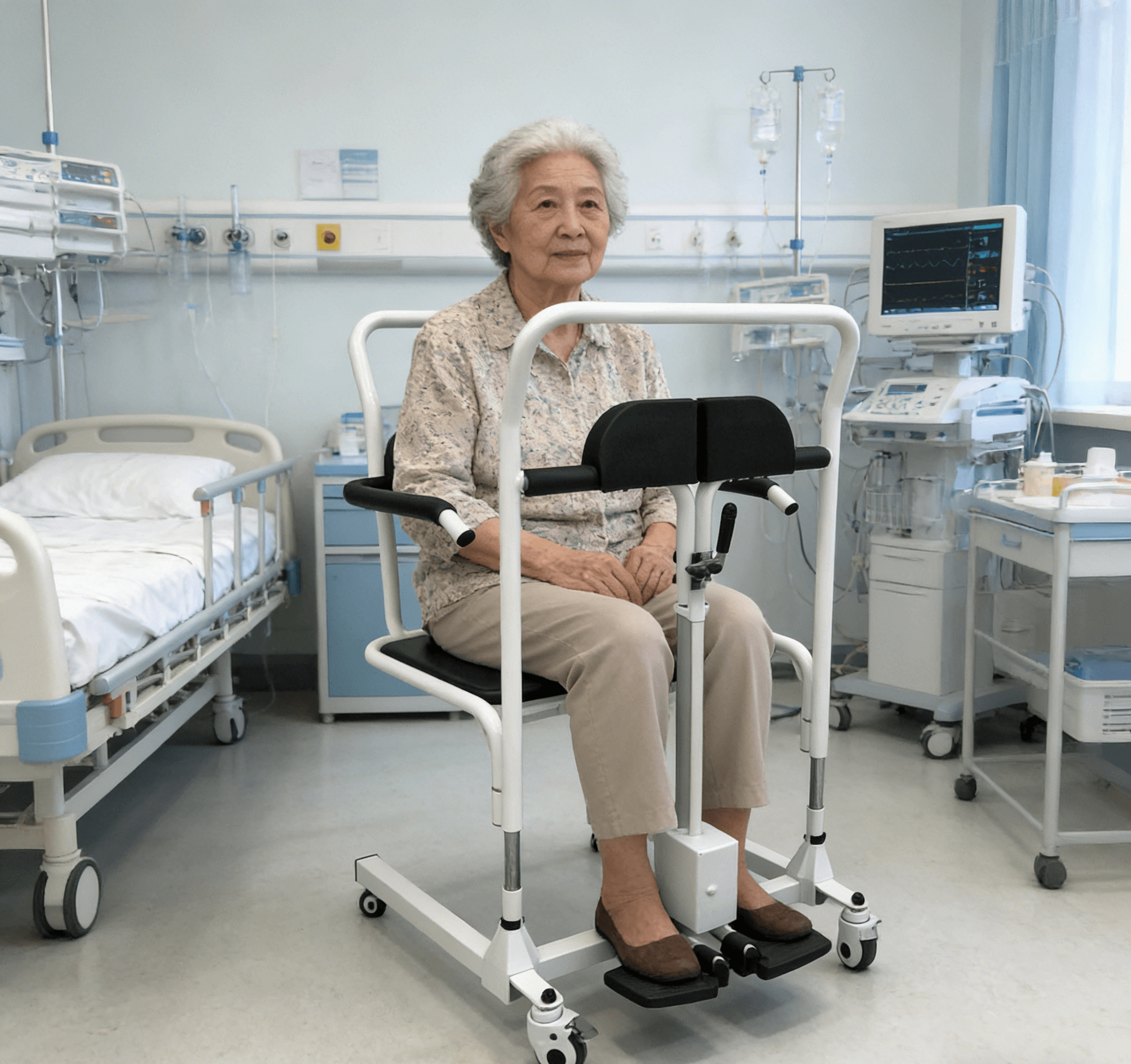
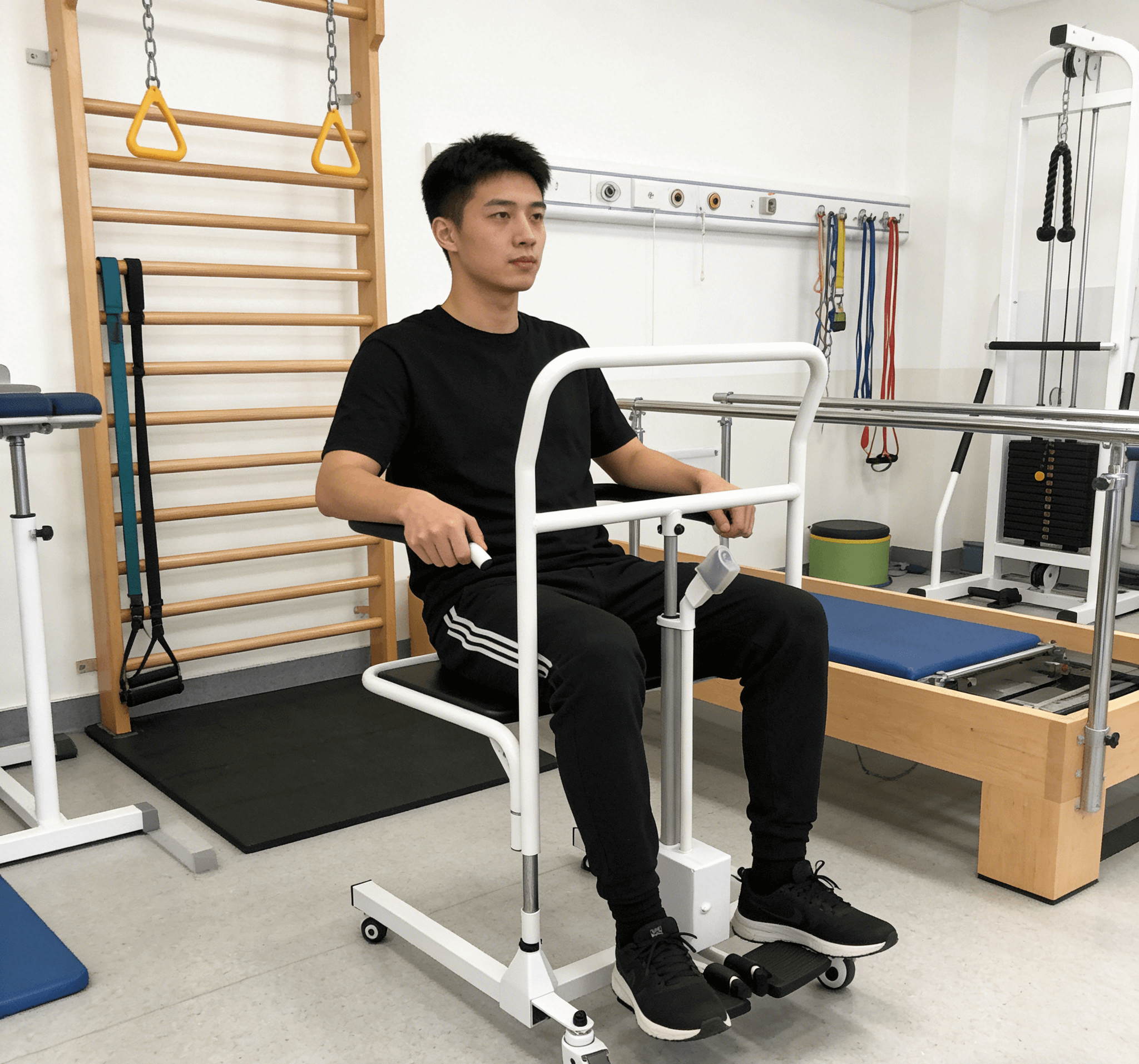
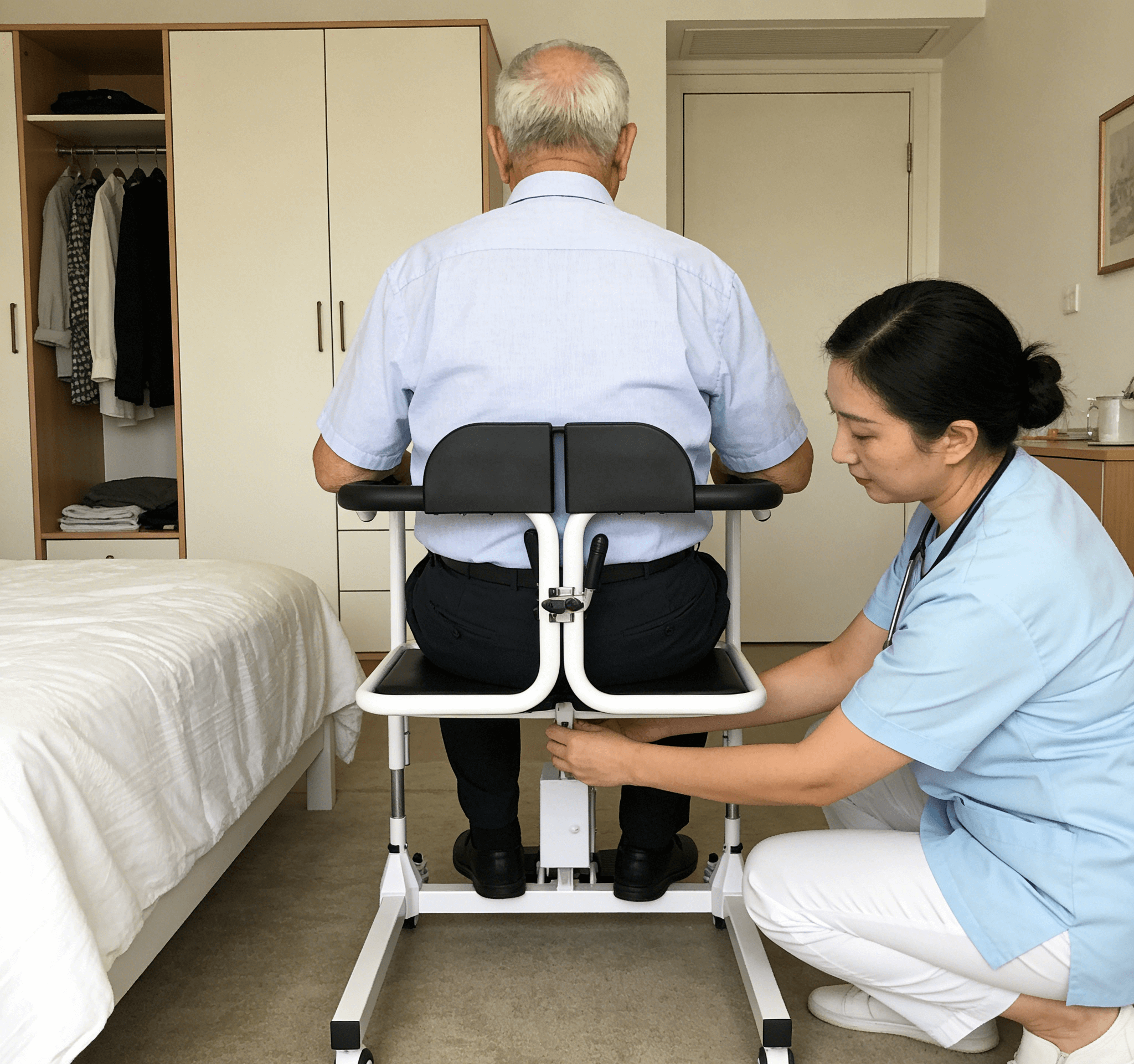
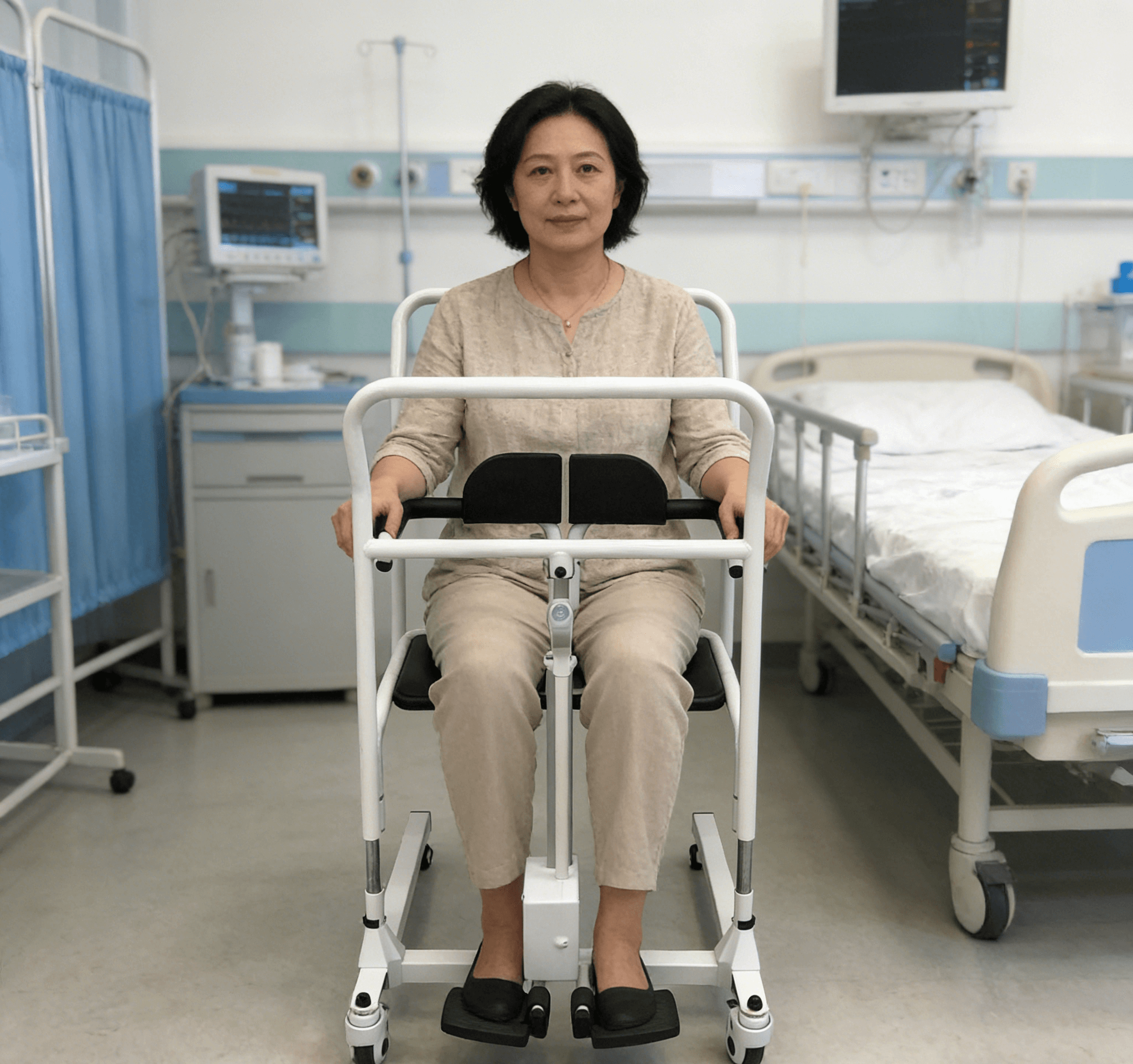
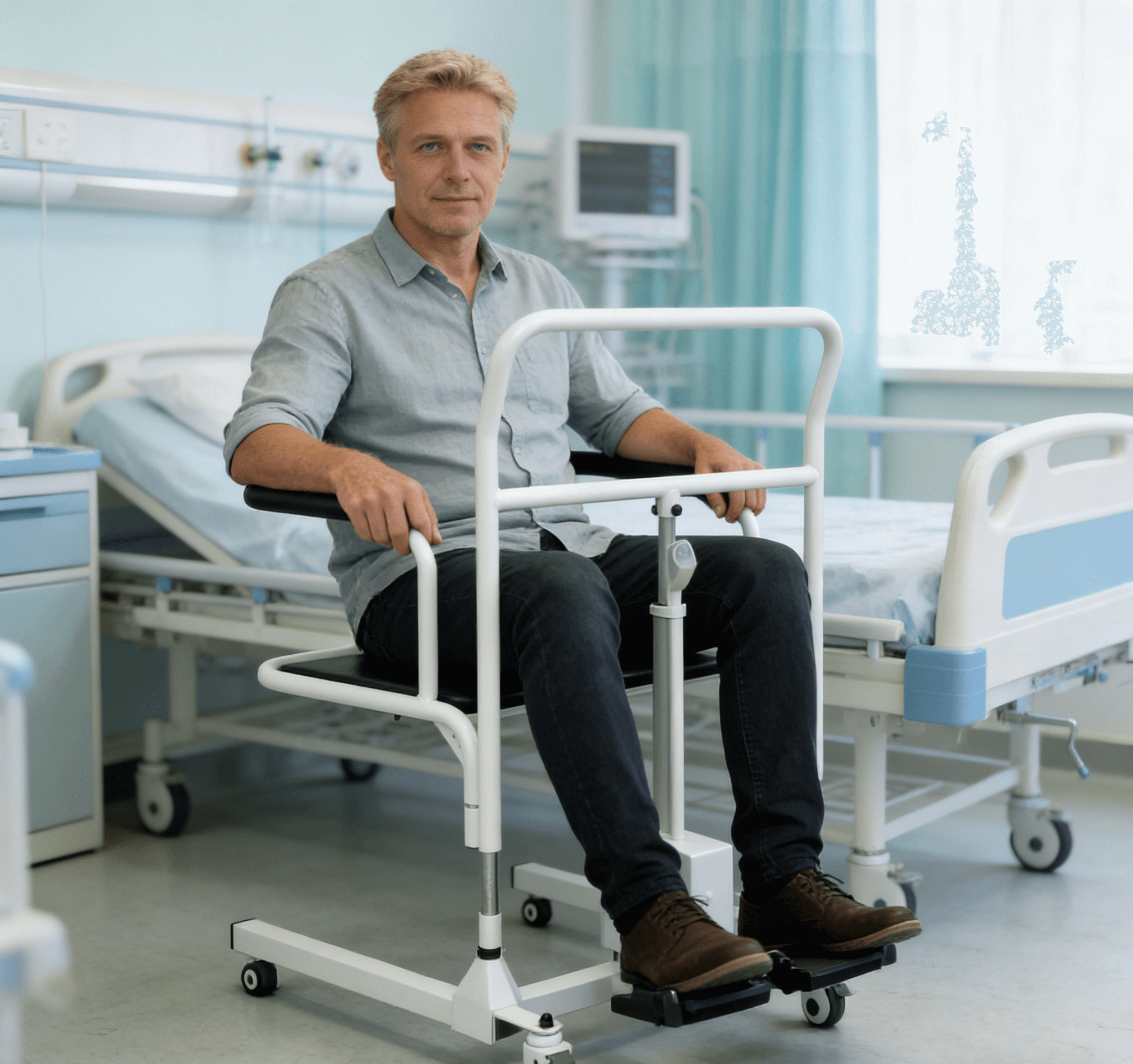
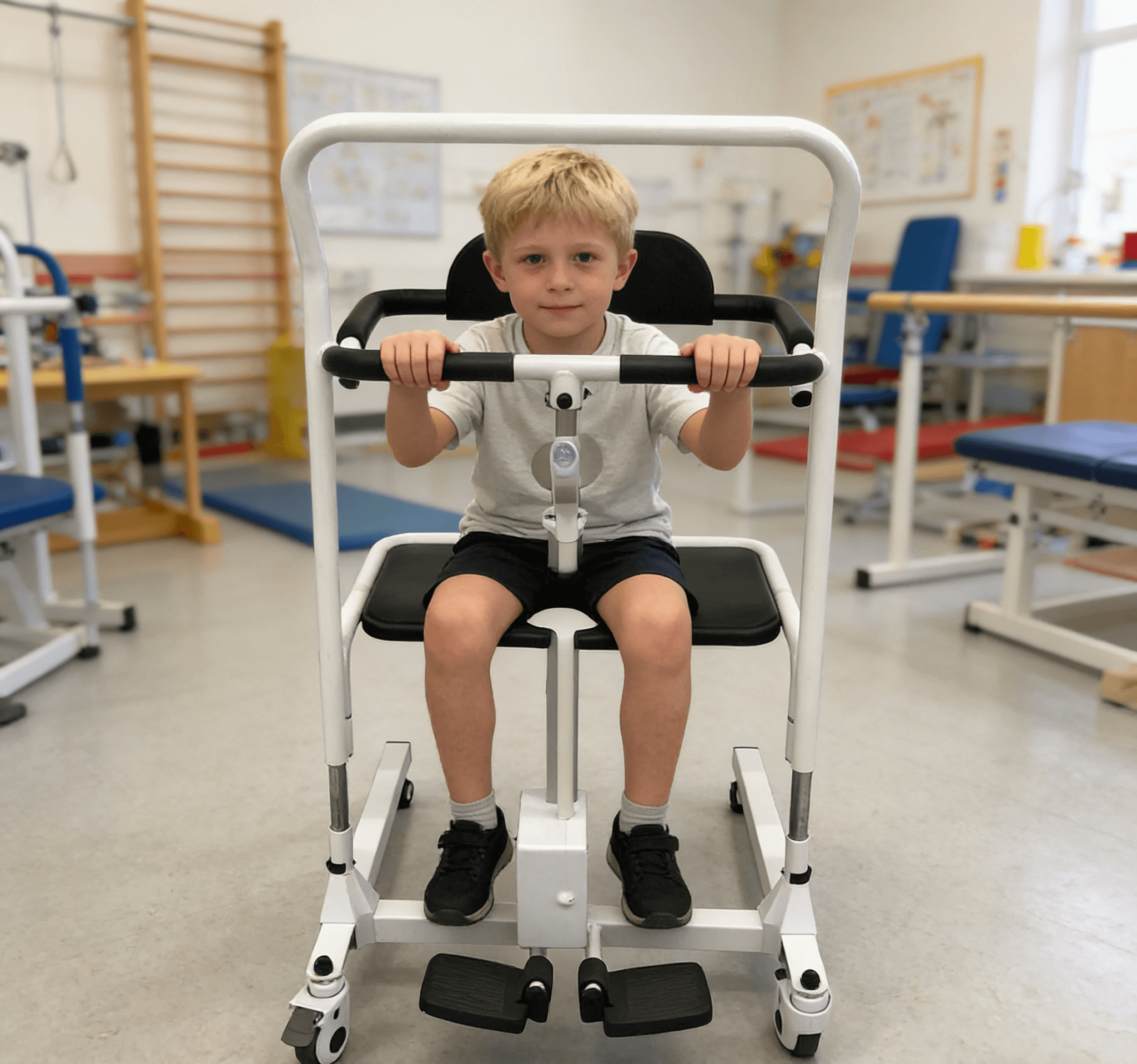
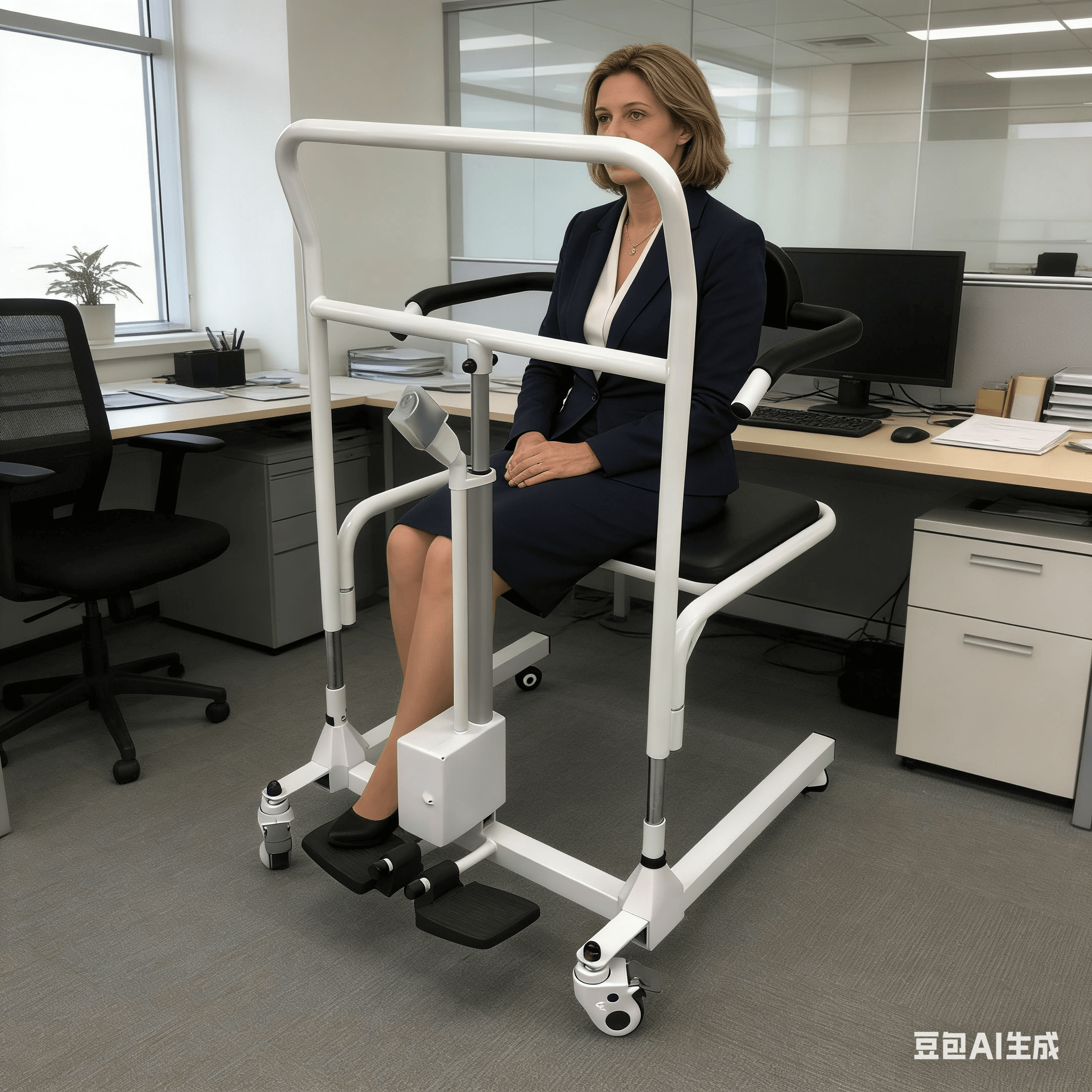
Working Principle: Standing aids are specifically designed for patients with partial leg support ability. They use a support plate to hold the patient’s thighs and hips, and a frame to wrap around their chest or below the knees. With electric or hydraulic assistance, they help patients transition from a sitting position to a standing position. Once standing, the patient can move slightly to sit in another location.
Alternative Names: Standing lift, upright transfer machine.
2. Target User Groups
Patients with partial standing ability but insufficient leg strength or difficulty getting up.
Patients with neurological diseases such as stroke or Parkinson’s disease, who need assistance to initiate the standing movement.
Used as a rehabilitation training tool to help patients rebuild confidence and ability in standing and walking.
Patients who are conscious and able to understand and follow simple instructions.
3. Advantages
Encourages active participation: It promotes patients to use their own muscle strength, serving as part of the rehabilitation process.
Maintains bone density and circulation: Regular standing helps prevent osteoporosis and improve blood circulation.
Closer to natural transfer: It is generally more psychologically acceptable to patients.
More compact equipment: Usually smaller in size than full-function Hoyer Turning Lifts.
4. Limitations
Not suitable for patients who are completely unable to stand.
Requires patients to have a certain degree of upper body strength and cognitive ability to cooperate.
Cannot be used if the patient’s knees cannot be stably extended.
III. Decision Guide: How to Choose?
You can make a decision by answering the following key questions:
Key Question Choose Hoyer Turning Lift Choose Standing Aid
Can the patient stand with assistance? No Yes
Can the patient’s legs bear any weight? No Yes, at least partially
Is it for rehabilitation training? Usually no Yes
Is the patient conscious and able to cooperate? Not necessary Necessary
Is the primary goal of care to completely avoid falls and weight-bearing? Yes No (not the primary goal)
Brief Summary:
Using a Hoyer Turning Lift = "Lifting" the patient.
Using a Standing Aid = "Helping" the patient stand up.
IV. Professional Advice and Safety Notes
Consult professionals: Before purchasing or renting any equipment, be sure to consult an occupational therapist. They can conduct a comprehensive assessment of the patient’s abilities and provide the most professional advice on equipment selection and usage training.
Receive formal training: Regardless of the type of equipment, the first use must be under the guidance of a professional. Learn how to correctly use the sling, fasten the support straps, and operate the equipment.
Regular equipment checks: Before each use, check the equipment for damage and ensure all buckles and mechanical structures are in good condition.
Conclusion
Both Hoyer Turning Lifts and Standing Aids are indispensable safety tools in modern care. They are not competitors but complementary solutions for meeting different patient needs. The right choice starts with an accurate assessment of the patient’s physical abilities. Investing in appropriate equipment not only creates an absolutely safe transfer environment but also safeguards the patient’s dignity and represents a long-term investment in the caregiver’s health. Let the power of technology transform the most dangerous part of care into a safe, controllable process.